Does Your Small Business Need a Support Bot or a Shared Inbox?
Test one week of customer questions before paying for a support bot.
On Monday morning, two people at a small furniture shop reply to the same delivery question. Neither spots the customer who wrote on Friday about a damaged chair. The owner starts looking for a chatbot. Before buying one, it’s worth asking which problem costs the shop more: writing the same answer repeatedly, or being unable to see who owes a customer an answer.
For the first problem, try a bot on a small set of questions with stable, published answers. For the second, start with a shared inbox, an owner for each conversation, and a visible queue for overdue replies. A company with ten staff and a company with two hundred can use the same test. The difference is how many people and teams a handoff has to cross.
Why this decision is timely
On November 10, 2026, Chatwoot added a way for its Captain assistant to recognize the subject of an incoming conversation and use that judgment in an automation rule. A message about getting money back can be routed to billing even when the customer never writes “refund.” Chatwoot says the feature is available on paid plans. In a separate public issue, a developer described an integration problem: a queued bot reply could arrive after a human had taken over. That is a concrete reason to test what a customer sees after the bot asks for help. Chatwoot release notes · Developer’s handoff report
The question extends beyond one vendor. The OECD's 2026 digitalisation survey covered more than 2,000 small and medium businesses across 12 countries. Its sample was not representative, but it documents businesses using ready-made AI tools and some experimenting with agents. A survey can't tell a furniture shop whether a bot is worth the subscription. Last week's inbox can. OECD survey
Read twenty conversations before booking a demo
Take twenty consecutive customer conversations from a normal week. Include the difficult ones. Make a private tally of three things: could a public policy fully answer the question, did somebody need to inspect an order, and did the customer have to ask twice? Use anonymized examples for the vendor demo.
| What the customer asks | What a good first response does | Who should finish the job? |
|---|---|---|
| “Do you deliver on Saturdays?” | Gives the published delivery policy and any postcode exceptions. | A bot can finish if the policy fully answers the question. |
| “You promised Saturday. Where's my chair?” | Recognizes an existing order and routes it with the customer's message attached. | A person with access to the order, or a separately verified order lookup. |
| “The replacement is damaged too. Can I get my money back?” | Acknowledges the repeated problem and passes the history to someone authorized to decide. | The employee who can actually resolve the refund request. |
Suppose only three of the twenty questions can be answered from the policy, and six customers chased the shop for an update. I’d spend the first week assigning an owner and a follow-up date. Suppose instead fourteen questions repeat the same delivery and collection policies, and the remaining six already reach the right employee. In that shop, a narrow bot pilot has a plausible job. Those counts are examples; use your own inbox to decide.
Give the bot one job and a clear exit
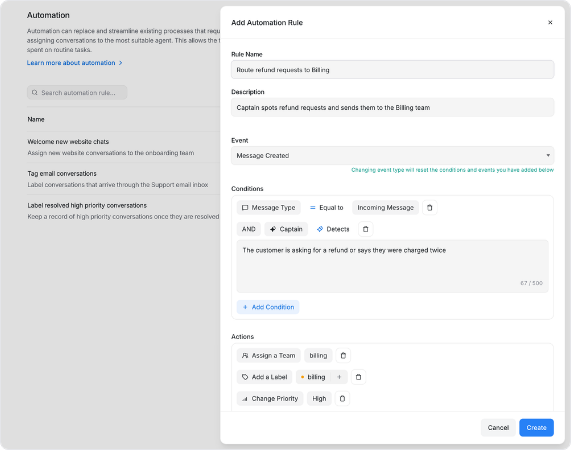
Chatwoot’s actual product walkthrough. View the release · Explore the open-source project.
For a Chatwoot trial, give Captain the current delivery policy and test it in the Playground. Start with the three messages above, then use the wording customers actually send: “Can someone ring me?”, “Same problem again”, or photos with almost no explanation. Inspect the run details to see which rules and handoffs fired. Playground messages use credits, so include testing when estimating cost. Captain setup and testing guide
Have a colleague take over midway through one test. Send another customer message immediately. Count how many customer-facing replies arrive, whether the colleague sees the full history, and whether the customer has to repeat an order number. Then try the same handoff after closing time. The customer should hear a promise the business can keep, such as the actual hours a person answers, rather than waiting through a string of cheerful holding messages.
What if the real bottleneck is ownership?
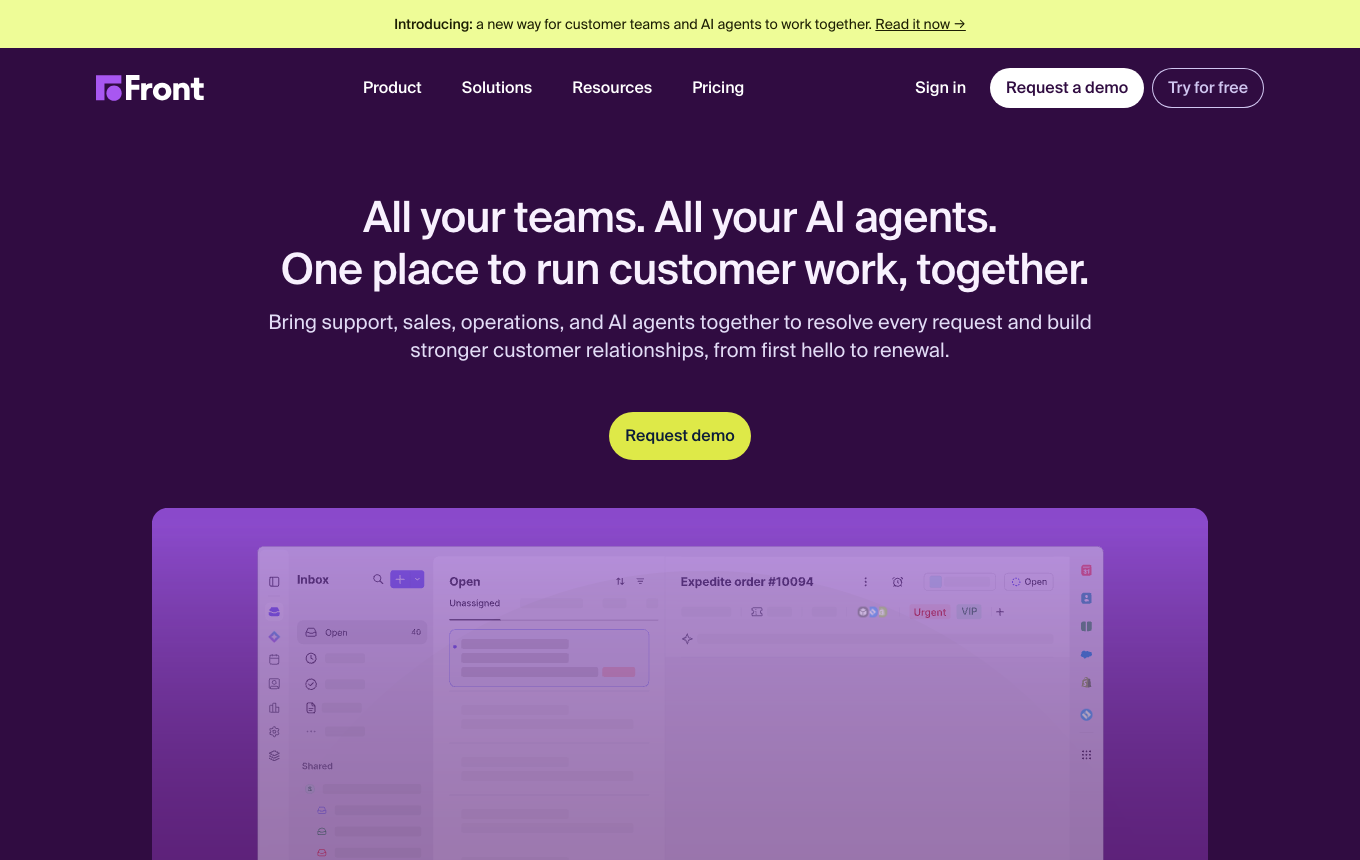
Front offers a shared inbox for customer teams. View Front on Newtools · Visit Front.
Try a shared-inbox workflow with the same twenty examples. Assign each message to one person and agree who covers their queue when they're away. For a larger company, repeat the exercise across sales, support, and billing. If a refund passes through three teams and each one thinks someone else owns it, the best bot reply in the world still leaves the customer chasing.
Track resolved routine questions, repeat contacts about the same issue, and time until a person takes ownership of exceptions. Imagine a bot sends forty replies, but only ten customers get a complete answer without contacting you again. If the pilot cost $60 in software and staff review, the cost is $6 per independently resolved case. Dividing by forty gives $1.50 per reply, which answers a different question. Use the same period and include review time when comparing the cost of saved replies in a shared inbox.
The buying decision gets easier once the owner can name the failure. If policy questions consume the day and the handoff works, expand the bot one topic at a time. If customers mostly wait for decisions only people can make, give those people a queue they can trust. To see whether a shared inbox fits your team's existing tools, start with the Front product listing.