Harness Engineering: Why AI Coding Needs More Than a Model
Learn the seven systems that make AI coding useful, repeatable, auditable, and safe.
A model is the inference engine. A harness is the surrounding runtime that decides what the model sees, which actions it can take, where it runs, what state persists, how work is verified, and when a human must intervene.
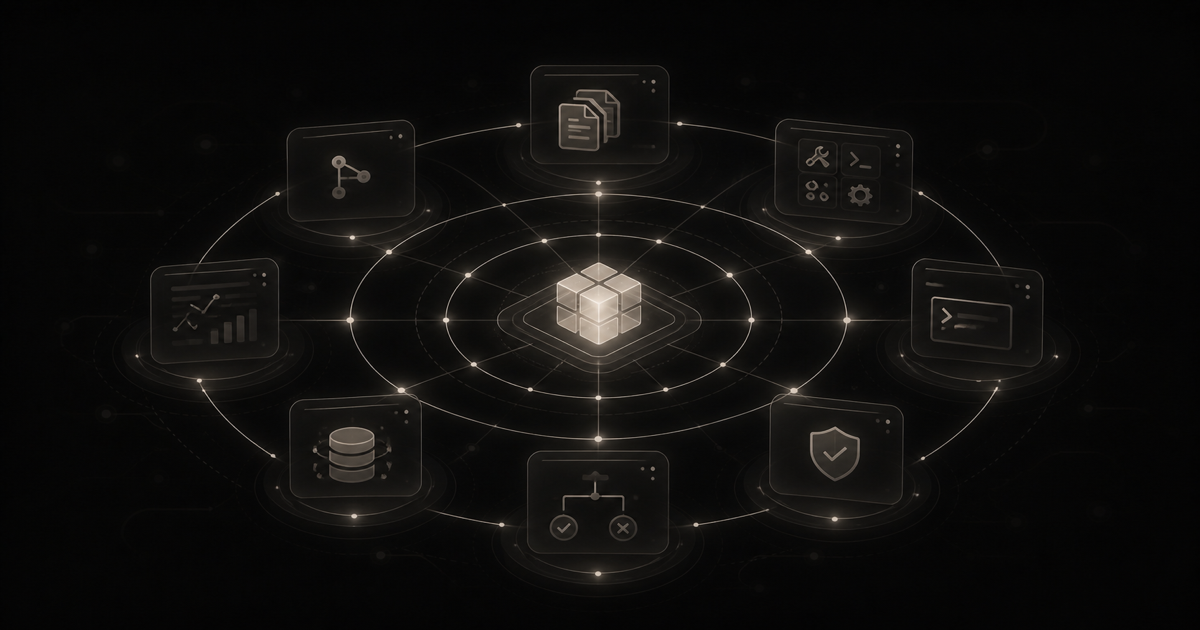
Better models raise the ceiling. Better harnesses make that capability usable, repeatable, auditable, and safer. The defensible claim is that AI coding needs more than a better model, not that the harness always matters more.
What harness engineering means
Harness engineering is the design of the system around an AI model so it can complete bounded work in a real environment. In coding, that system includes repository context, tools, a shell, dependencies, permissions, tests, state, observability, cost controls, and human approval.
Anthropic's building effective agents describes retrieval, tools, and memory as augmentations around a language model. It also distinguishes fixed workflows from model-directed agents and recommends adding complexity only when it produces measurable value.
The term is useful because “which model?” explains only part of an agent product. Two coding tools can expose the same underlying model and still behave differently because one retrieves better context, offers safer tools, or verifies work more effectively.
Model versus harness
| Layer | Model | Harness |
|---|---|---|
| Core role | Reasons and predicts tokens | Turns reasoning into bounded software work |
| Context | Accepts a context window | Selects files, instructions, history, and external data |
| Action | Proposes a tool call | Defines tools, schemas, permissions, and execution |
| Environment | Has no repository or shell by itself | Provides code, dependencies, services, and isolation |
| State | Receives the current prompt | Persists plans, checkpoints, memory, and artifacts |
| Verification | Can critique output | Runs tests, lint, types, browsers, and policy gates |
| Recovery | Can reason about an error | Detects failure, retries safely, re-plans, or escalates |
| Governance | Has behavioral safeguards | Enforces approvals, secret boundaries, and audit logs |
| Economics | Has token-level cost | Controls routing, caching, parallelism, and stopping |
When an agent edits the wrong file because it received stale documentation, that is often a context-system failure. When it cannot complete a task because the model cannot reason through the code, that points toward the model. Useful engineering starts by identifying which layer failed.
The seven layers of a coding harness
1. Task contract
Define the goal, constraints, non-goals, acceptance criteria, and stopping condition. “Improve the dashboard” is open-ended. “Fix the mobile overflow without changing the desktop layout; pass these checks” creates a testable contract.
2. Context system
Give the agent a short map to authoritative repository documents, schemas, current decisions, and relevant code. Long context is not automatically correct context. A giant instruction file can crowd out the task while still omitting the one constraint that matters.
3. Agent-computer interface
Tools for reading, searching, patching, running commands, opening a browser, and querying services need clear schemas and useful feedback. The model should receive actionable errors, not an opaque “failed.”
4. Execution environment
Use reproducible dependencies, an isolated branch, worktree, container, or virtual machine, explicit network rules, and a clear secrets boundary. The environment should be realistic enough to verify work without giving every task production credentials.
5. Orchestration and state
Plans, checkpoints, retries, subtask coordination, memory, and recovery belong here. More agents are not automatically better. Parallel work can duplicate effort and produce correlated mistakes if ownership and state are vague.
6. Verification loop
Run type checks, tests, lint, browser flows, security checks, and artifact comparisons that match the risk. Self-review is not independent verification. A model can confidently approve the same mistaken assumption that shaped its implementation.
7. Observability and governance
Record tool traces, diffs, cost, latency, failures, approvals, and intervention points. Require accountable human approval for production, billing, credentials, access control, and destructive actions.
What OpenAI's agent-first repository teaches
OpenAI's harness engineering case study describes an internal product repository generated by Codex under a strict experiment. Early progress was slow because the environment lacked useful tools, abstractions, and structure.
The team added a short repository map, per-worktree application instances, browser driving and DOM inspection, accessible logs and traces, mechanical architecture constraints, tests, review loops, recovery, and recurring cleanup agents.
The interesting result is not the headline amount of generated code. “Zero manually written code” did not mean zero human engineering. People defined goals, designed the infrastructure, encoded taste, reviewed outcomes, and maintained the harness.
OpenAI estimated the product was built in about one-tenth the time, but that is an internal vendor estimate rather than a controlled experiment. The team also said the autonomy depended on the repository's specific structure and did not claim it would generalize everywhere.
Anthropic's experiment shows the cost of more harness
Anthropic's long-running application harness compared a solo model run with a planner, generator, and evaluator system using the same model. The fuller harness produced a more functional application because planning created a testable specification and the evaluator used Playwright against the running app.
It was also far more expensive in the published example: about $200 over six hours versus $9 over twenty minutes for the solo run. Anthropic noted that stronger models can make some decomposition unnecessary and advised removing components that are no longer load-bearing.
That is the practical lesson. A harness can create substantial lift, but orchestration has cost. Add a layer when traces show a recurring failure it can solve.
Research shows interfaces change outcomes
The NeurIPS paper SWE-agent found that purpose-built commands and feedback formats materially improved a model's ability to navigate, edit, and test repositories. Its historical benchmark numbers should not be compared directly with current products, but the interface result remains useful.
The ICLR 2026 paper Programming with Pixels compared visual computer-use workflows with direct file and Bash tools. Direct interfaces caused large improvements and often brought the same systems closer to specialized coding-agent performance. Tool design was a separate variable from the model.
Simple workflows remain a serious baseline. Agentless used a deterministic localization, repair, and validation process instead of an open-ended autonomous loop and was competitive in its original setting. Harness engineering includes the decision not to build a complicated agent.
A minimum viable coding harness
You do not need a multi-agent platform to begin:
- Choose three recurring, bounded tasks.
- Write acceptance criteria before invoking the model.
- Provide a short repository map linked to current sources of truth.
- Expose only the tools needed for the task.
- Run work in an isolated branch, worktree, container, or sandbox.
- Require deterministic checks before completion.
- Save the plan, commands, diff, test output, and cost.
- Require human approval for high-risk state changes.
- Compare results with a simpler workflow or no-agent baseline.
- Add orchestration only when evidence identifies a recurring failure.
This is enough to reveal whether your main problem is context, tools, verification, permissions, or model capability.
Common harness failures
- Instruction sprawl: many pages of rules conflict or hide the current source of truth.
- Blind autonomy: broad permissions turn a prompt-injection or mistaken command into a larger incident.
- Self-grading: the same system writes both the code and a weak test that approves it.
- Coordination overhead: multiple agents repeat research or edit the same files.
- Cost blowouts: background work, retries, and evaluators multiply spend without a stopping rule.
- Stale memory: persistent context preserves old architecture and superseded decisions.
- Environment drift: verification passes in an agent sandbox that no longer resembles deployment.
- Metric gaming: teams count commits or pull requests rather than accepted outcomes and escaped defects.
When to upgrade the model
Upgrade the model when failures consistently show missing reasoning, domain knowledge, planning depth, or task horizon even though context, tools, and verification are sound.
Improve the harness when failures show missing files, ambiguous tools, environment drift, unsafe permissions, weak tests, poor recovery, or invisible execution.
Simplify the harness when traces show duplicated planning, unnecessary evaluator passes, or scaffolding a newer model now handles reliably.
Frequently asked questions
Is prompt engineering part of harness engineering?
Yes, but it is only one part. A production harness also includes context selection, tools, execution, state, verification, observability, permissions, and recovery.
Does a better harness make a weak model good?
No. A harness can reduce avoidable failure and make capability more usable, but it cannot supply reasoning or knowledge the model fundamentally lacks.
Do I need multiple agents?
Usually not at the start. A single agent with a clear contract, good tools, and deterministic verification is the right baseline. Add roles only when their separation solves a measured failure.
What should teams measure?
Track accepted outcomes, review time, escaped defects, unsafe actions, cost, latency, and the proportion of tasks requiring intervention. Lines of code and pull-request count are weak proxies.
Sources and method
The definition and field examples draw from OpenAI's harness engineering report, Anthropic's effective-agent guidance and long-running application experiment, plus independent research on agent-computer interfaces, direct tools versus visual interaction, and simple deterministic workflows. Claims are scoped to what those sources establish.