Best AI Coding Agents 2026: Cursor vs Claude Code vs Codex vs Windsurf
A practical comparison of Cursor, Claude Code, Codex, and Windsurf, now Devin Desktop.
The best AI coding agent is the one whose work you can trust. That sounds obvious. It is also missing from most comparisons, which tend to start with a benchmark and end with a universal winner.
Our answer is narrower. Cursor is the best fit for a multi-model agent inside an IDE. Claude Code makes the strongest case for a terminal workflow built around Claude. Codex suits developers supervising parallel work across OpenAI's local and cloud surfaces. Windsurf, renamed Devin Desktop in 2026, now makes its case as an IDE command center for different agents.
These are documented workflow fits, not medals from a Newtools lab. We did not run the four products through identical private tasks, and our claims stop where the evidence does.
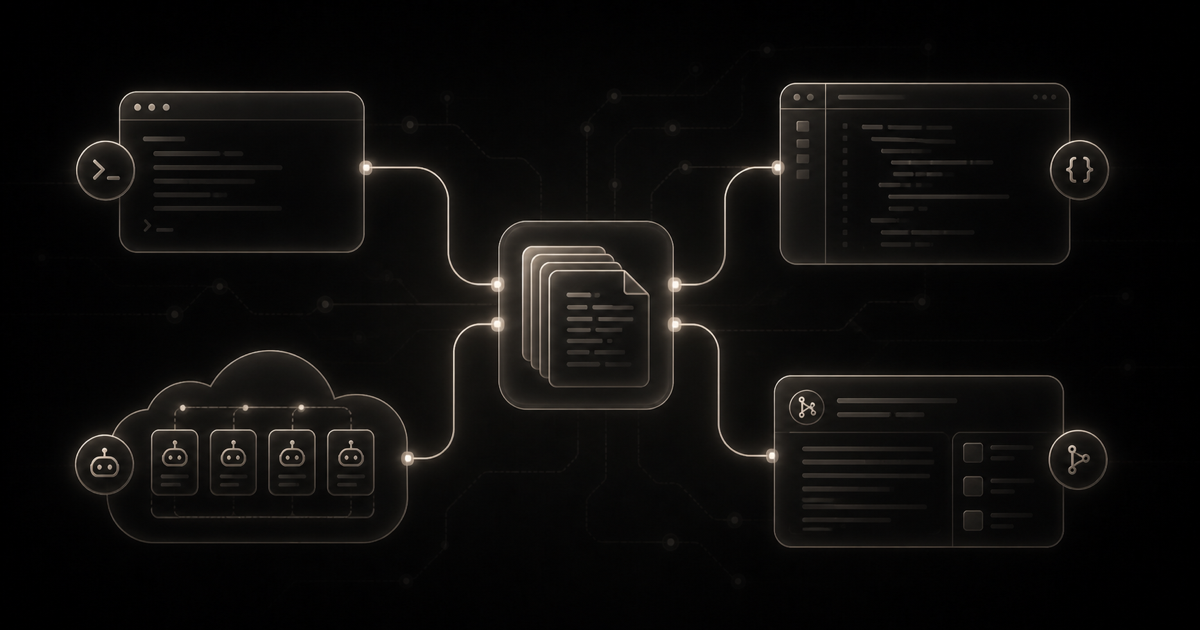
The short answer: Start with Cursor for an editor-first team that wants model choice, or Claude Code if the terminal is already home. Codex becomes interesting when parallel local and cloud delegation is the job. Devin Desktop, formerly Windsurf, makes the most distinctive pitch: coordinate a mixed agent fleet without leaving the IDE.
Which AI coding agent fits which workflow?
All four can inspect a repository, edit several files, call tools, and run commands. The useful differences appear after the demo: where the agent lives, what it can do unattended, how approvals work, and whether the bill remains legible.
| Agent | Best documented fit | Model position | Remote or parallel work | Entry price checked 13 Aug 2026 |
|---|---|---|---|---|
| Cursor | Multi-model, IDE-native development | Cursor and multiple frontier providers | Parallel cloud agents | Free; Pro $20/month |
| Claude Code | Terminal-first repository work | Claude models | Remote surfaces and agent teams | Pro $20/month; Max from $100/month |
| Codex | OpenAI agent supervision | OpenAI Codex models | Parallel threads, worktrees, and cloud tasks | Included with eligible ChatGPT plans; extra credits available |
| Devin Desktop (formerly Windsurf) | A multi-agent command center inside an IDE | Devin, Codex, Claude Agent, Cascade, and other ACP agents | Local and cloud agents sharing Spaces and worktrees | Free; Pro $20/month |
We weighted four things: fit with the developer's normal work surface, clarity of command and network controls, support for unattended work, and cost visibility. “Best fit” below means the current product documentation makes the strongest case on those factors. It does not mean one agent wrote better code in a controlled Newtools test.
The prices are entry points. Claude allowances vary with repository size and other Claude use. Cursor and Devin can add usage charges. OpenAI's current Codex rate card is token-based and estimates roughly $100 to $200 per developer each month on average, with wide variation. Long-running agents turn a flat plan price into a poor cost forecast.
The model is not the whole product
Model names attract attention. The surrounding harness governs the work: it chooses context, exposes files and secrets, approves commands, provisions sandboxes, preserves transcripts, and presents the final diff. Two products offering the same underlying model can therefore behave nothing alike in day-to-day use.
That is why this comparison starts with workflow; a fast model in the wrong control system is still the wrong tool.
Cursor is the editor-first, multi-model option
Cursor asks for the smallest change in habit. A developer can trace code, request a multi-file edit, switch models, and review the patch without leaving an IDE-shaped environment. Cloud agents extend that pattern to parallel tasks running away from the laptop.
The trade-off is a wider operational boundary. Cursor's current cloud-agent documentation describes isolated virtual machines containing cloned repositories, dependencies, secrets, startup commands, and network access. Admins can restrict outbound domains, but the useful setup is also a powerful one. Cursor's security page documents Privacy Mode and its data-handling guarantees; a security review should still cover repository access, integrations, retention, and environment secrets.
That is the pitch. Cursor earns its place here through flexibility, not because editor use is automatically safer or better. For a team already living in an IDE and unwilling to standardize on one model family, it is the sensible first trial.
Claude Code turns repository policy into part of the tool
Claude Code's center of gravity is the terminal. Its real advantage is not the command prompt itself but the amount of behaviour a team can encode around it: repository instructions, hooks, skills, MCP servers, subagents, and permission rules. That makes the setup feel closer to maintained engineering infrastructure than a personal autocomplete preference.
Anthropic's security documentation says Claude Code starts read-only, asks before file changes and commands, and confines writes to the working directory unless the user expands access. The permission system can allow, deny, or ask for particular tools. A careless approval can still defeat a careful default.
Pro costs $20 monthly; Max tiers cost $100 and $200. The strongest reason to pay is not “Claude writes best.” It is that a terminal-oriented team can make its rules explicit and reusable. Multi-provider model choice is the obvious reason to look elsewhere.
Codex makes parallel work a first-class workflow
Imagine three bounded jobs: repair a failing test, investigate an upgrade, and draft a migration plan. Running them in one checkout invites collisions. Codex approaches the problem as supervision, with an app, CLI, IDE extension, cloud environments, and mobile access under one product identity.
OpenAI's Codex app announcement describes parallel agent threads and built-in worktree isolation, a concrete advantage when the work genuinely divides. Skills capture procedures; tasks move between local and cloud surfaces.
Parallelism has a downside. It multiplies weak instructions and token spend. OpenAI's guidance on running Codex safely therefore covers sandboxing, permission gates, and audit telemetry before the agent reaches elevated commands or the network. Use this setup only when coordination saves more time than it consumes.
Windsurf is now Devin Desktop
Devin Desktop is the new name for Windsurf. Cognition says the existing IDE, plans, extensions, workflows, settings, and in-progress work carry over. At the same time, its current positioning puts the Agent Command Center at the front: Devin, Codex, Claude Agent, OpenCode, Cascade, and other Agent Client Protocol agents can share one editor.
Spaces provide common context and Git worktrees. Cascade remains available, but it is now one of the bundled local agents rather than the whole story. Its current documentation lists Code and Chat modes, planning, web search, memories, rules, MCP, checkpoints, and simultaneous sessions.
Permission policy needs extra care in a mixed fleet. The desktop terminal offers Disabled, Allowlist Only, Auto, and Turbo levels for Cascade, while Devin Local uses a separate permission model. Test the actual agents your team will enable; the shared window does not give them identical controls.
Devin pricing starts at free, with Pro at $20 and Max at $200 monthly. Teams starts at $80 per month, with full seats priced separately. The compelling reason to trial it is unusual: one IDE can become neutral territory for several agents rather than another single-agent shell.
Three alternatives worth a deliberate look
GitHub Copilot fits organizations where issues, pull requests, policy, and billing already live in GitHub; its current plans combine IDE agent mode, CLI, cloud agents, review, MCP, and usage credits. Existing governance is the reason to put it on the shortlist, not novelty.
Gemini CLI is a different proposition: an open-source terminal client with generous experimentation limits, including up to 1,000 model requests per day with Google login according to Google's quota guide. One caution matters: a request is not a completed task.
Then there is Kiro, which is worth considering only if specification-led work is already attractive. Plans run from a 50-credit free tier to paid options between $20 and $200 monthly; credit use changes with prompt complexity and model choice.
Do not add all three merely to fill a trial spreadsheet.
What do coding-agent benchmarks prove?
A 2026 study of 7,156 agent-created pull requests found sharp differences by task. Documentation pull requests reached an 82.1% acceptance rate; new features stopped at 66.1%. The category results were messier than any winner's badge: Claude Code led documentation and features, Cursor led fixes, and no agent swept the field.
That evidence is useful, but it is not a head-to-head lab result; the paper observed real pull requests made under different conditions.
METR's randomized early-2025 study found that 16 experienced open-source developers took 19% longer with AI allowed across 246 issues in familiar repositories. Most AI use involved Cursor and the Claude models available then. In February 2026, METR said a later experiment could not provide a reliable current estimate because of participant selection and the difficulty of measuring developers running concurrent agents. Its weak evidence pointed toward improved productivity, but the researchers declined to quantify the gain confidently.
The honest conclusion remains unresolved because benchmark success, perceived speed, and accepted work measure different things.
How should a team test AI coding agents?
Give the closest two candidates six tasks: a bug, a small feature, a test repair, a refactor, a documentation change, and one awkward workflow specific to your repository.
Write acceptance criteria and verification commands before the first run. Every attempt should begin from the same repository state, with the permissions you would actually retain after purchase.
Keep a small scorecard. Record agent cost and human review time, but also note unsafe actions, false completion claims, and defects that escape the first review. Lines changed, tokens consumed, and pull requests opened belong in the margin; accepted outcomes decide the trial.
A split result is useful. An IDE agent may win interactive feature work while a terminal agent handles controlled maintenance better. Buying one license for every job is convenient procurement, not necessarily sound engineering.
Our recommendation
Start with the work surface your developers already trust. Trial Cursor for a multi-model IDE, Claude Code for policy-rich terminal work, Codex for parallel OpenAI tasks, or Devin Desktop for a mixed agent fleet.
Finally, test the nearest rival on real work and keep whichever output survives review with the least hidden cost.
Frequently asked questions
Which AI coding agent is best overall in 2026?
There is no credible universal winner. Based on current product documentation, Cursor fits a multi-model IDE workflow, Claude Code fits a configurable terminal workflow, Codex fits parallel work across OpenAI's local and cloud surfaces, and Devin Desktop, formerly Windsurf, fits teams supervising different agents from one IDE. Test the nearest two on your own repository.
Is Claude Code better than Codex?
Claude Code has the edge for a terminal workflow built around Claude models, repository instructions, hooks, permissions, and MCP; Codex has the edge when parallel threads, worktree isolation, and movement between an app, terminal, IDE, and cloud are central to the job.
Is Cursor better than Windsurf?
Cursor is the more natural editor-first choice when easy model switching and background agents drive the decision. Windsurf is now Devin Desktop; it is the more unusual option because one IDE can coordinate different local and cloud agents through shared Spaces. Compare both with the same repository and permission policy.
Can an AI coding agent replace code review?
No. An agent can run checks and inspect a diff, but reviewing its own work is not independent verification. Changes involving production, authentication, billing, personal data, migrations, security controls, or irreversible operations still need deterministic checks and an accountable human reviewer.
How should a team test AI coding agents?
Give the closest two candidates six representative tasks over two weeks. Start from identical repository states, write acceptance criteria first, and record accepted outcomes, human review time, unsafe actions, escaped defects, and total cost. Prefer trusted results over activity metrics such as lines changed or pull requests opened.
Sources and method
The Newtools editorial team checked product pages, security documentation, and pricing on 13 August 2026. The principal records were Cursor's Pricing, Security, and Cloud Agents pages; Anthropic's Claude Code, Security, and Permissions documentation; OpenAI's Introducing the Codex App, Codex Rate Card, and Running Codex Safely; and Cognition's Devin Desktop, Pricing, Cascade, and Terminal pages. Alternative-product details came from official GitHub, Google, and Kiro documentation retrieved the same day.
Independent evidence came from the 2026 task-stratified pull-request study, METR's July 2025 randomized trial, and METR's February 2026 experiment-design update. Newtools did not receive payment for the ordering in this article and did not run a controlled product benchmark. Prices, model access, and quotas should be checked again before purchase.